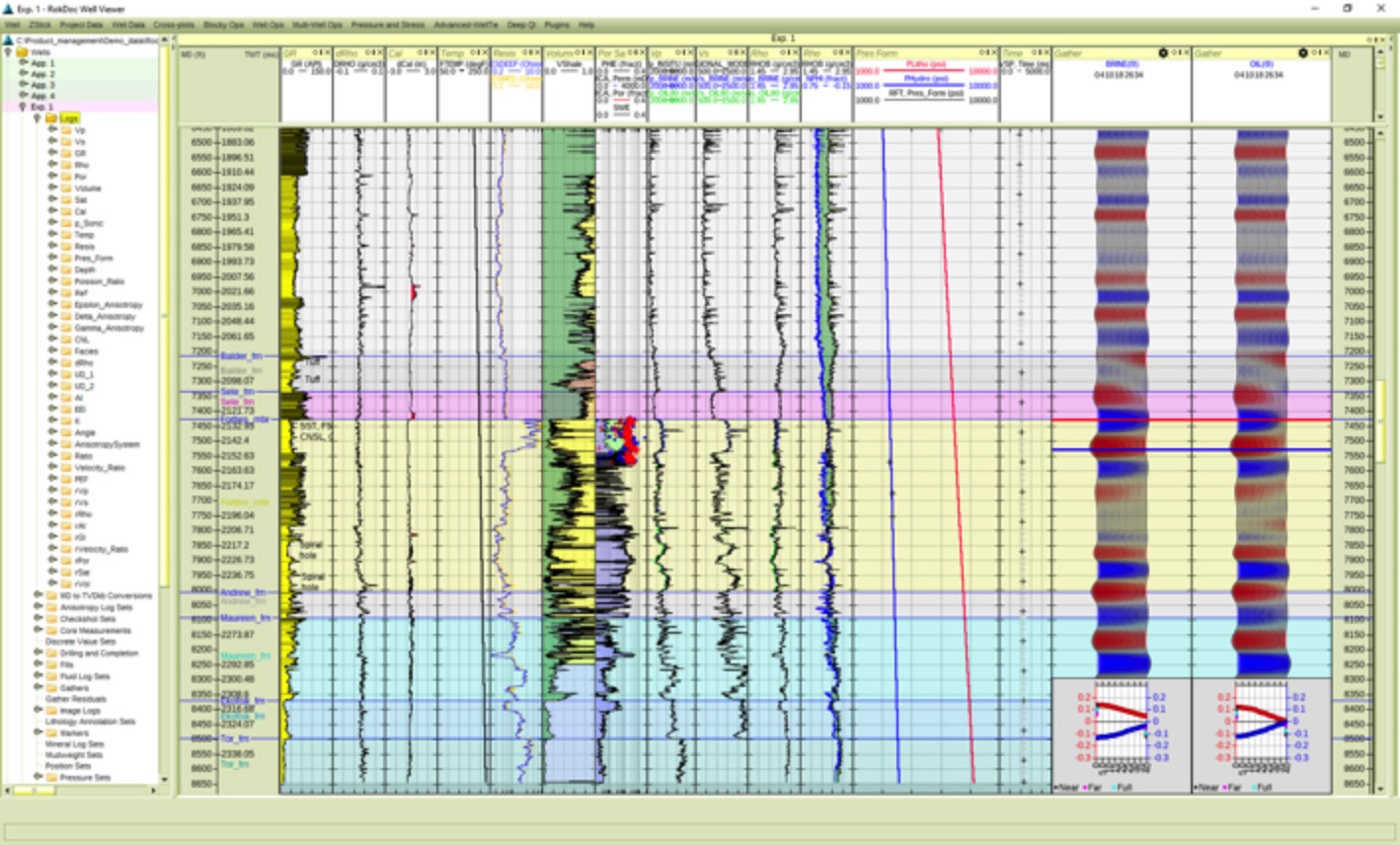
Quickly build a powerful rock physics modeling framework for your assets and prospects. Understand the link between the geological and petrophysical properties and the observed seismic response. Gain insight into what is actually driving the seismic responses observed between wells.
Robustly link the well-based models and understanding to the seismic response, interpret seismic amplitudes with increased confidence, capture and realize the value of broadband seismic datasets in the quantitative interpretation workflow.
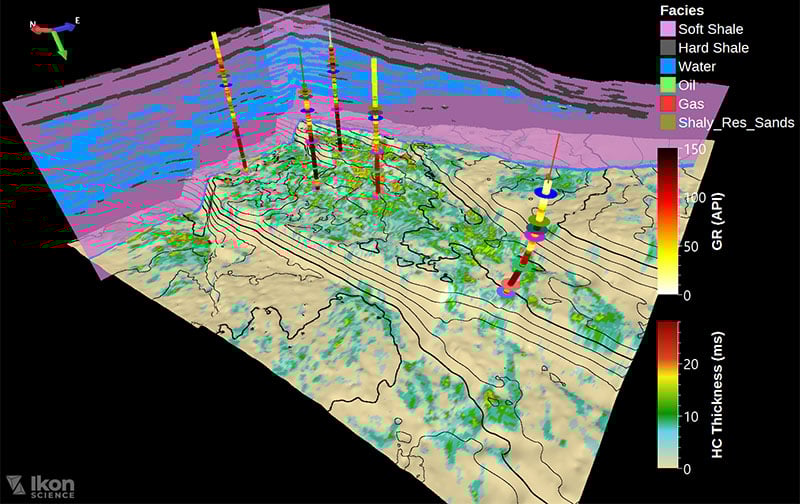
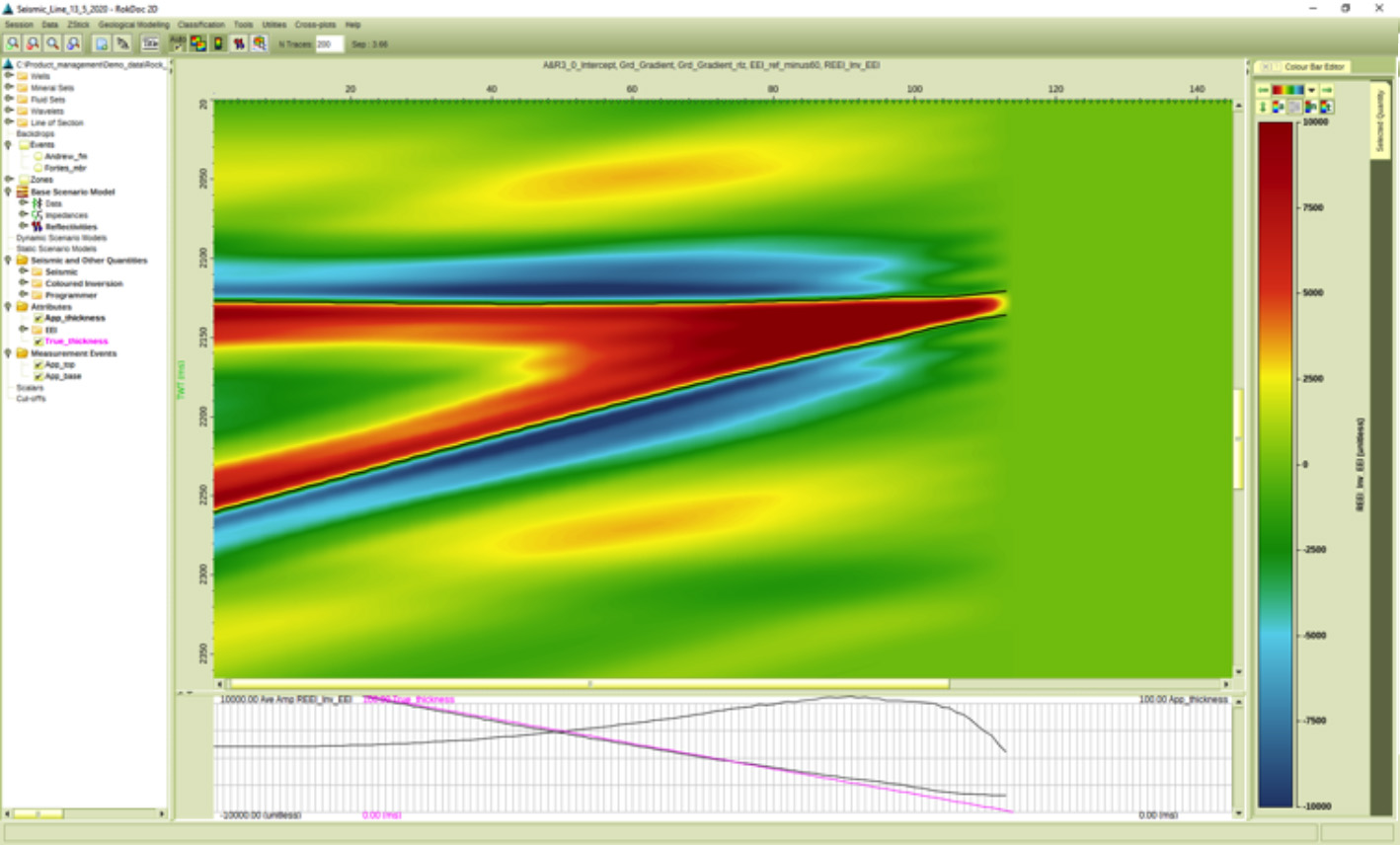
Add an extra dimension to your modeling. Investigate the impact of geometry and lateral variation in rock properties on seismic amplitudes, explore the impact of tuning on amplitudes and reflector geometry, model hydrocarbon contacts and directly compare 2D synthetic models to seismic lines.
Optional Add-Ons extend the core Rock Physics license with advanced capabilities —supporting more specialized and complex workflows.
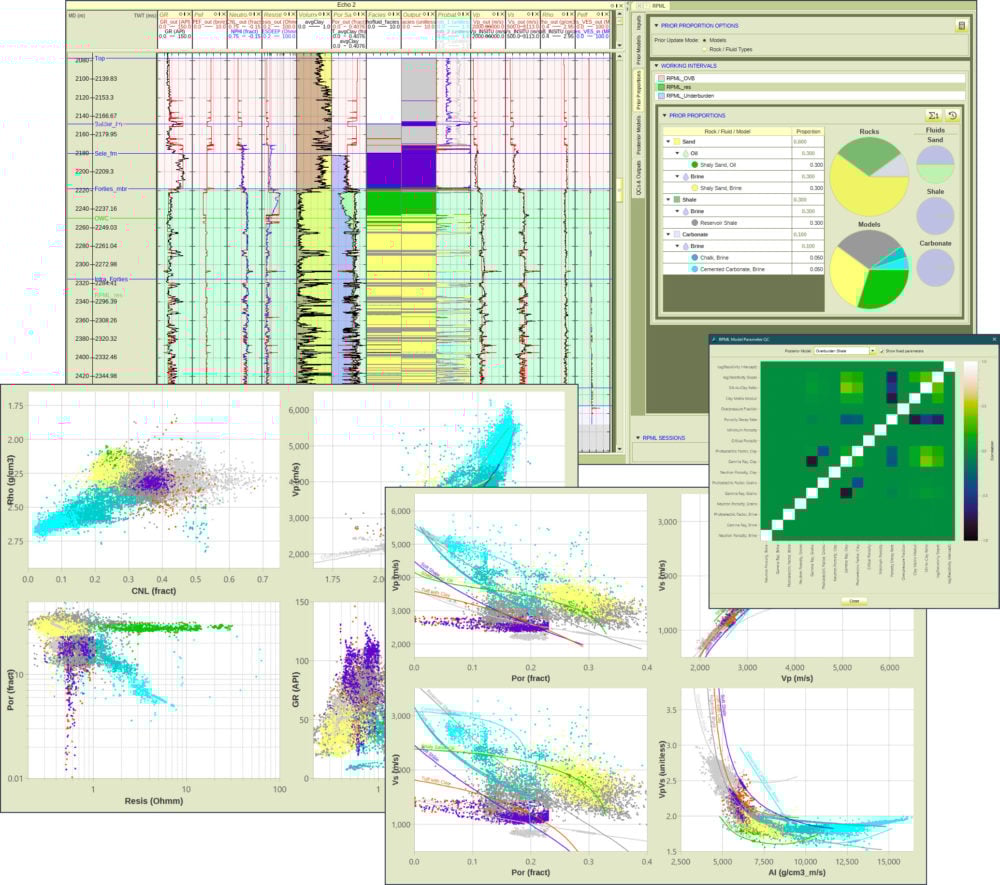
The Deep QI add-on has best-in-class machine learning (ML) algorithms to predict missing data not only using training datasets but also guided with geological knowledge from petrophysics and rock physics. This toolkit accelerates and improves analysis of regional information due to its flexibility in handling data sets of varied size and volume. The functions span the RokDoc platform by leveraging well data, rock physics models, and pressure trends. Streamline rock property trending for Ji-Fi and use trained ML models for petrophysical property prediction.
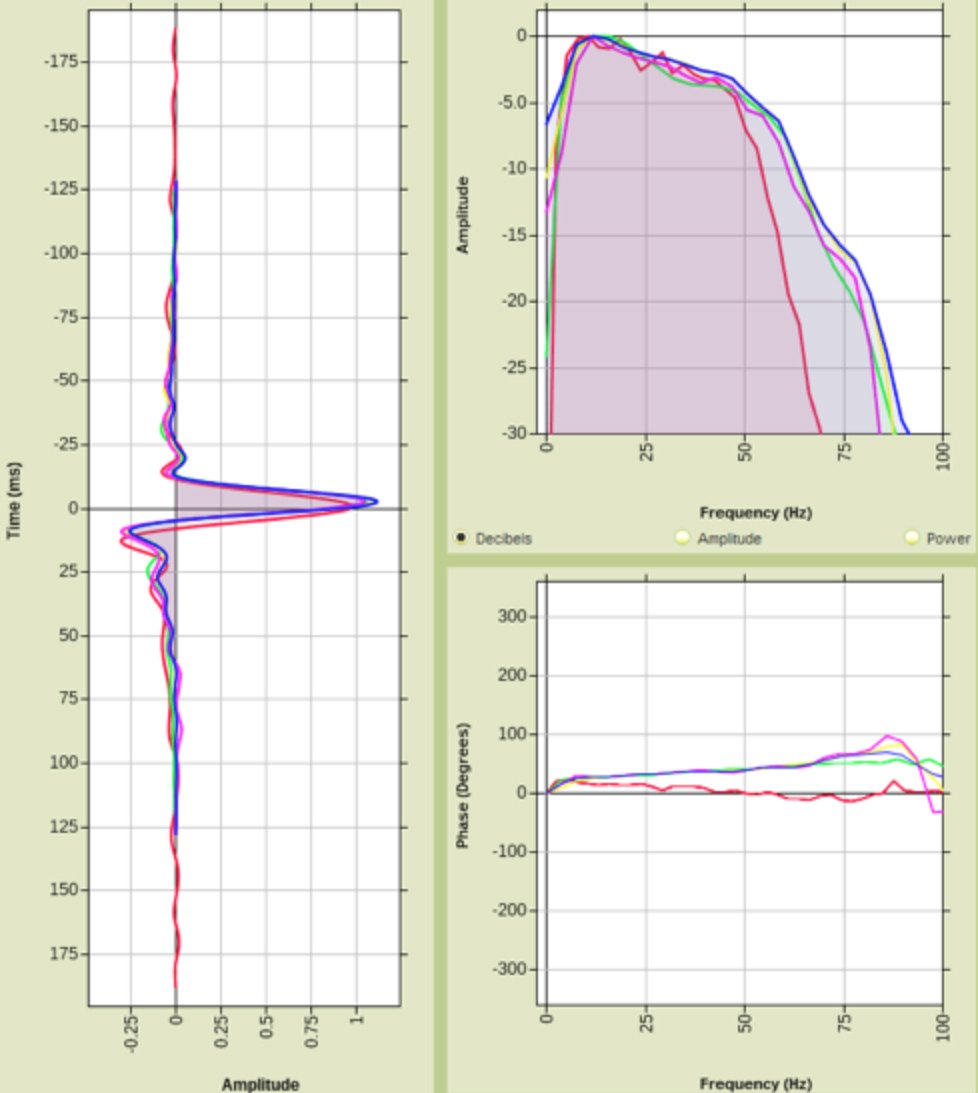
Updated technology specifically for modern broadband datasets. This add-on allows users to estimate wavelets more robustly from these datasets, thereby leveraging the added broadband information in the seismic interpretation workflow.
Wavelet analysis and estimation functionality for improved handling of low frequencies in broadband, nodal and onshore seismic datasets. Includes: an updated Roy White multi-taper method, Parametric Constant Phase and Bayesian multi-well multi-stack estimation with broadband priors.
Unlock the value of broadband data in reservoir characterization
Broadband datasets often present us with challenges in wavelet estimation, primarily due to the abundance of low frequency information present in these datasets. The Advanced Well-tie add-on allows the user to estimate wavelets from broadband seismic more robustly and therefore the value of broadband information can be realized in the wider workflow.
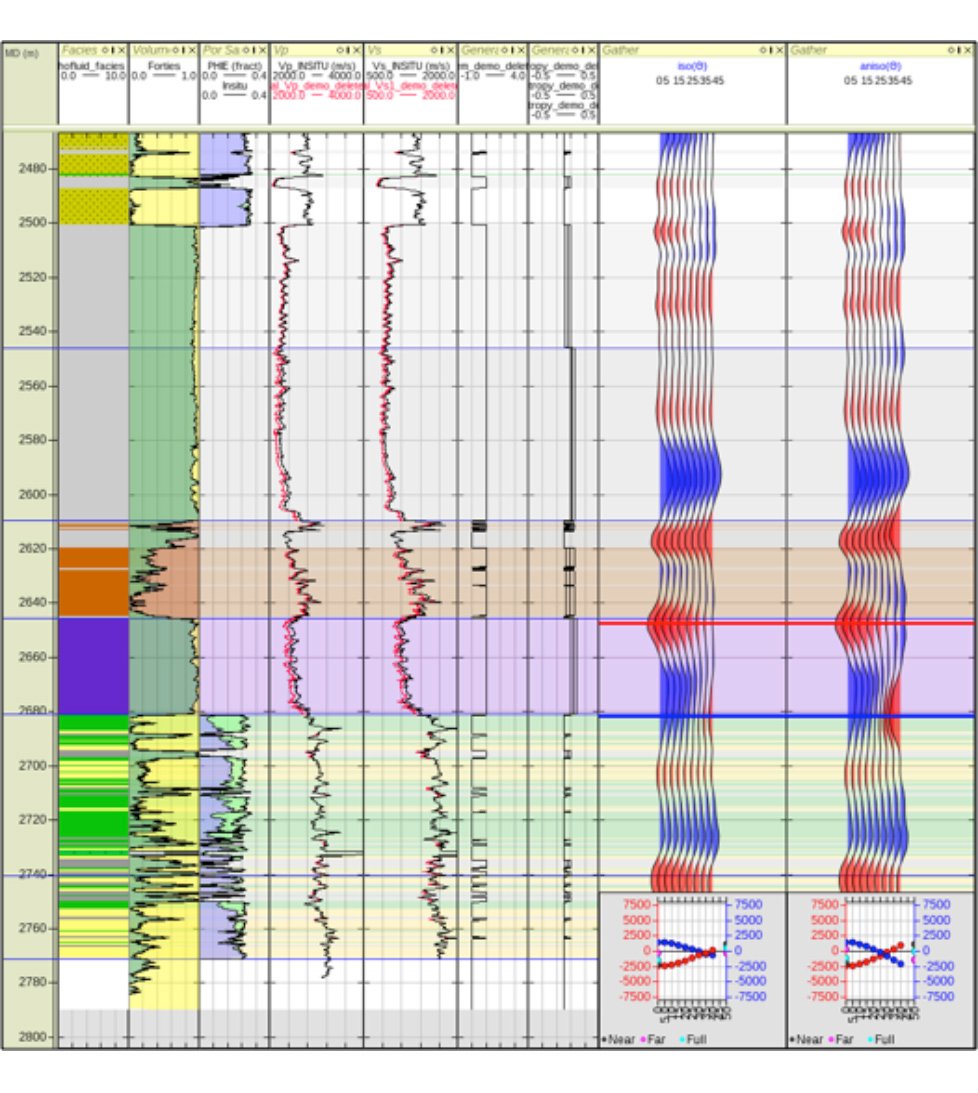
Are you giving enough consideration to the impact of elastic anisotropy on your geoprediction workflows? This add-on provides tools that allow users to build models of anisotropy in order to understand the effect of elastic anisotropy on seismic response, and to correct elastic log measurements for the impact of elastic anisotropy.
Build 1D and 2D synthetic seismic models to explore the impact of anisotropy on the seismic response. Includes: Thomsen parameter estimation, VTI/HTI and orthorhombic model building, anisotropy database, plane wave analysis and blocky modelling.
Don’t ignore anisotropy – use it to your benefit
Anisotropy impacts many of the datasets we routinely work on during the E&P lifecycle. With the right data, anisotropy can be understood and leveraged throughout subsurface workflows to improve the quality and reliability of interpretations.
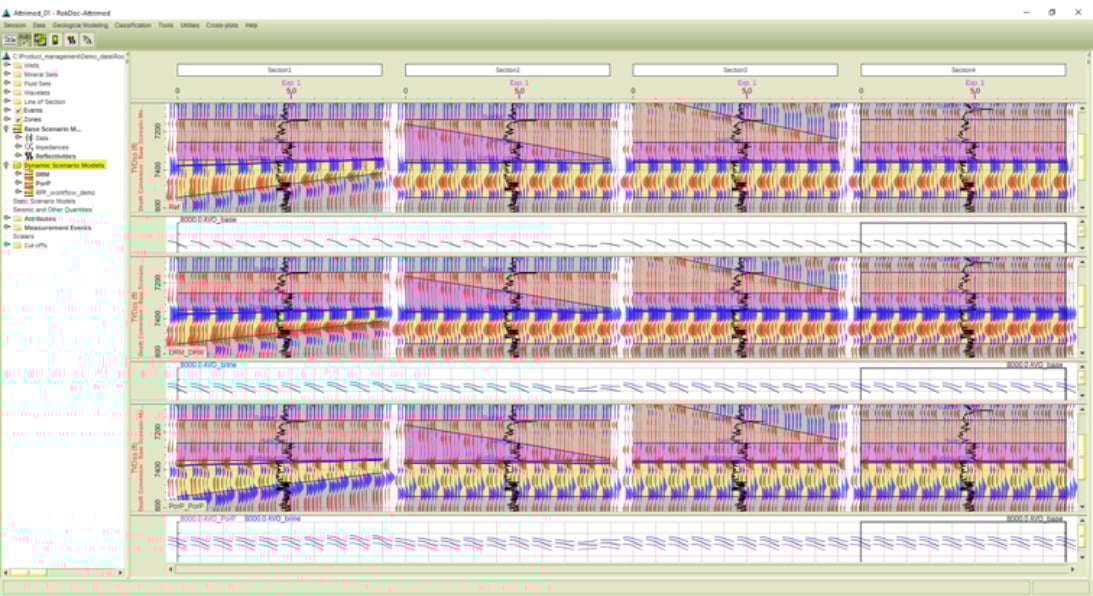
There are two fundamental controls on seismic amplitudes; the contrast in elastic properties across interfaces, and the geometry of the interfaces themselves. Attrimod allows users to build multi-geometry 2D models on a single canvas and apply rock physics perturbations simultaneously across all scenarios. Attributes can be extracted quickly and easily from all models allowing the investigation of the impact of both changes in elastic properties and geometry on the seismic response.
This add-on is a multi-scenario, multi-2D synthetic seismic modelling package for rapid generation of hundreds of geologically plausible models. Includes: multi-2D modelling and attribute sections, lithology and fluid substitution workflows, ray synthetics including Q and spherical divergence corrections.
Understand the impact of geometry on seismic response
Make comparisons across multiple geological and geophysical models. Get a more complete understanding of seismic amplitudes by including the impact of geometry and layering.
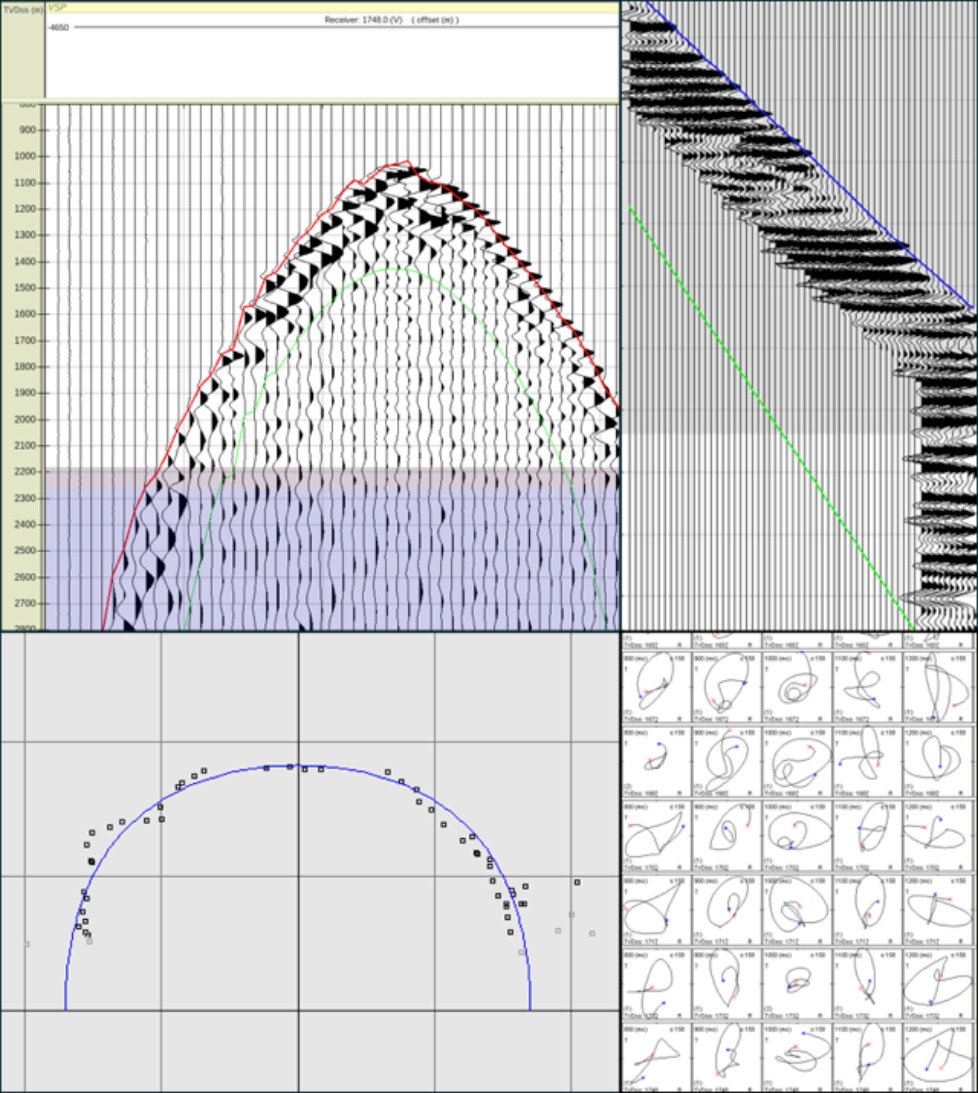
If available, VSP data can provide invaluable information to the subsurface geoprediction workflow, this add-on allows you to unlock that information. Beyond providing a robust time-depth conversion we can also use VSP to investigate the impact of elastic anisotropy and to assess the impact of multiple energy in seismic data.
A tool for offset, walkaway, walk-around and multi-component VSP datasets. Includes: common processing routines through to corridor stack, shear splitting / hodogram analysis and rose diagrams for fracture characterization.
Get the most out of VSP data, add knowledge to the wider workflow
Extract the most information from the available data - integrate VSP data into the wider workflow, understand the impact of anisotropy, reduce time-depth uncertainty, and investigate multiple energy.